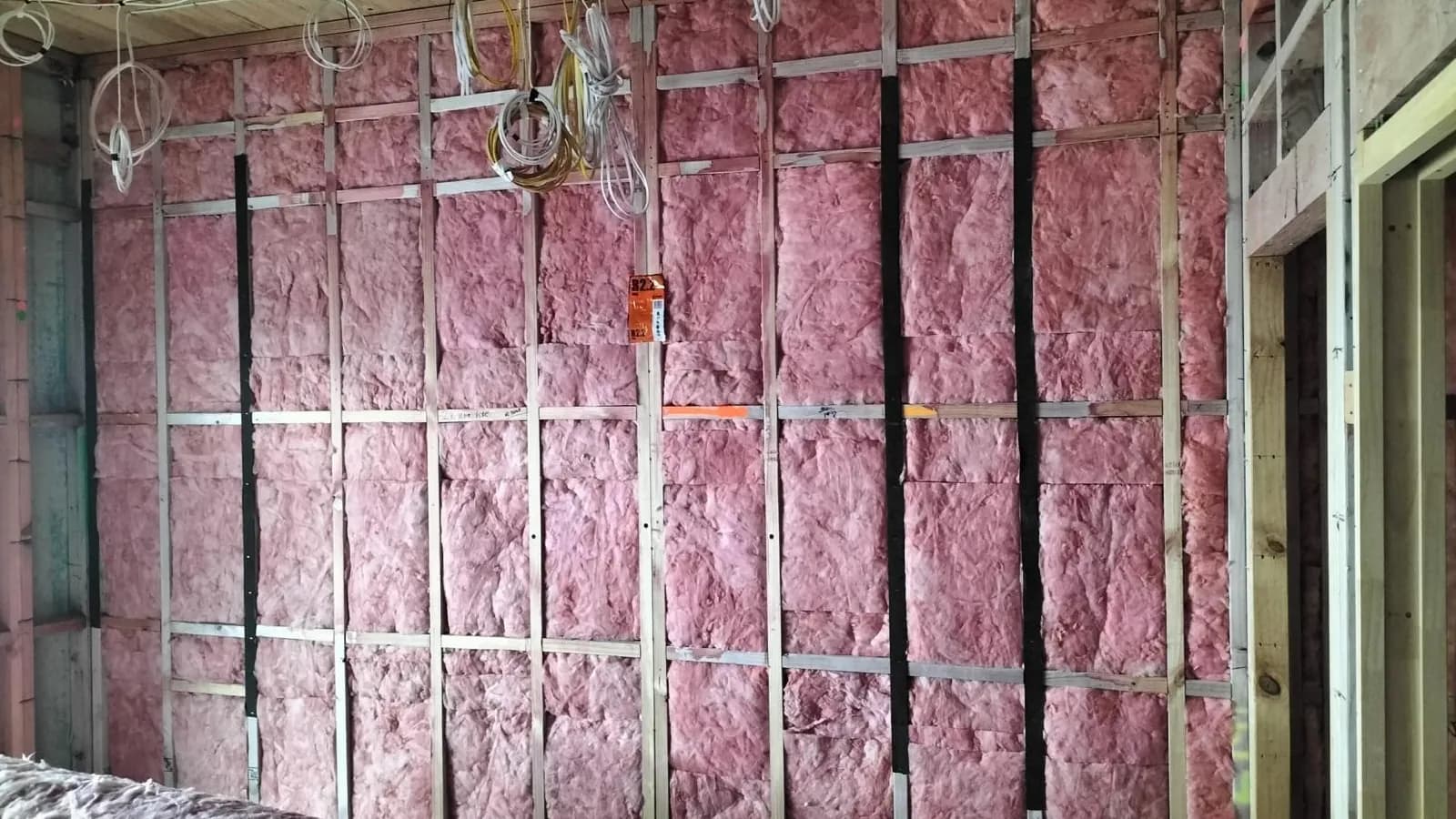
Insulation isn't just about hitting thermal targets. It's part of a wider wall and ceiling system that has been tested as a unit, for fire, acoustic, and thermal performance together.
Manufacturers like GIB and James Hardie publish fully specified systems that nominate not only the linings and fixings but also the type, density, and install method of the insulation inside. Those systems are rigorously tested as a single assembly. Changing any one element, even something that looks minor like swapping an R2.2 glasswool batt for a higher-density R2.5 polyester product, can void the system's certification and put compliance at risk.
Where this hits hardest: intertenancy, noise, and fire
Take GIB's Intertenancy Wall Systems. Many are specified with R2.2 glasswool and a particular lining like 13mm GIB Fyreline. Substitute the insulation with something that hasn't been tested as part of that system and the wall may no longer meet its fire-resistance rating. That's not a compliance hiccup. It's a safety issue.
GIB Noise Control Systems rely on exact combinations of insulation, fixings, and even staple spacing to achieve their stated STC (Sound Transmission Class) ratings. Deviations compromise acoustic performance and can put PS4 sign-off in jeopardy.
James Hardie's Fire Wall Systems follow the same logic. Their linings and assemblies are only certified for use with specific insulation types. Install a product outside that specification and the system may not pass council inspection or survive a compliance audit.
Where substitutions go wrong
The most common scenario: a last-minute change driven by supply shortages or a cost-saving idea late in the build. By the time linings are up, the substitution is invisible. Then the certifier reviews the documentation, the wall fails its check, and the cost lands on the main contractor, not the supplier who promised the product equivalence.
How to handle a swap without losing your night's sleep
If a substitution is unavoidable:
- Check the latest manufacturer system manual: GIB Systems Book, James Hardie technical literature, or the equivalent.
- Confirm the proposed substitute has BRANZ or CodeMark approval for use in that specific system.
- Communicate the change in writing to the architect, fire engineer, or acoustic consultant before the work goes ahead.
- Where no certified substitute exists, escalate to an alternative-solution compliance pathway with the territorial authority.
How we work this in practice
We work closely with builders, developers, and consultants to confirm every insulation product going into a specified system is the one that system was tested with. If a product isn't available, we identify a tested equivalent and help shepherd the documentation through. The QA pack at handover proves the build matches the spec, page by page.
Bottom line
Insulation is not a one-size-fits-all product. Understanding how it integrates into the wider wall and ceiling system is the difference between a smooth PS3/PS4 sign-off and a costly rework cycle.
If you're ever unsure, ask before the gib goes on. It's cheaper to get it right the first time.